8. Are you complaining about complaining?
Introduction
If this is your first time on my website, my practice here is dedicated to using research models as lenses on everyday experiences. I’m basically getting in some metacognitive reps and sharing them. The research model in play in this post is Systems Thinking’s DSRP Theory.
In the past few posts, I settled on a subheading DSRP Study: Reads / Mechanics in my posts, without making it clear what I meant by Reads / Mechanics. I won’t put off dialing in my meaning any longer.
As a basketball coach, I used the terms Reads and Mechanics to describe fundamental actions players make while playing hoop. In my mental model of the game, everything falls into these two buckets. Basketball skills like dribbling, passing, footwork, screening, shooting, help-side defense, etc., all have specific mechanics. Reads then, are just accurately assessing the mechanics of players playing. A classic example: If an offensive player fakes and the defender moves, the offensive player then attacks in the opposite direction the defender is moving. By doing so the offensive player takes advantage of the simple physics of inertia.
Basketball teammates are also reading each other’s mechanics throughout the game and reacting with mechanics of their own. Generally, a player makes a good read if they see other players act, and adapt their actions (mechanics) to take advantage of those motions. The goal of all players at any time is to increase their team’s probability of scoring, and decrease the probability the opponent scores. Inattentive players act without making reads.
System’s Thinking is similar. When I’m interacting with other people, I make DSRP reads based on what people say and do. I then use DSRP fundamentals to guide my next steps. (Generally though, I’m trying to collaborate with others, not compete.) The beauty of DSRP is this- it makes the fundamentals of adapting explicit and precise. These fundamentals are simple. Like all fundamentals though in most areas, they are not easy if you have other habits. And they only improve with effective practice.
Real World Example # 8
John was in my 11th grade Humanities class. He and I got along pretty well. We also collaborated during his 8th grade year- he was in my Humanities class then too, and on the middle school basketball team I coached. He didn’t like school much, but when topics interested him he was thoughtful and inquisitive. He especially excelled in discussions. Outside school, he enjoyed hunting and working machinery.
One day, I was sitting in my classroom waiting for John’s 11th grade section to arrive from English with Mr. Abbott. Mr. Abbott was a new teacher at our school and he was not from rural Vermont. Both of these factors often led to some students being harder on a teacher. (Generally though when a teacher stayed a few years, students became fiercely protective of them.)
John entered the classroom well ahead of the rest of the students. He was moving fast and looked annoyed. As he sat down he said, “Mr. Abbott is such a whine-ass.” “Whine-ass,” was a fairly popular teen judgement in that town’s culture. I paused, raised my eyebrows and nodded some. Then I smiled a little and replied, “John, are you complaining about Abbott’s complaining?”
John’s scowl slowly transformed to a quiet smile as he modeled my reply. Then he began to grin and laughed a little at himself. Other students started to shuffle, and class began. He and I never spoke about this exchange again.
However, for some reason this interaction seemed to hook John. For the remainder of that year he thoughtfully engaged most of the time. He was such a consistent contributor it was harder to tell what topics he liked or didn’t like. His mental models were dynamic, and balanced. He regularly made class discussions more interesting and fun.
DSRP Study 8: Reads / Mechanics

Map 1. A couple of part-whole System maps of John and Mr. Abbott to introduce the reader to the people in the story.
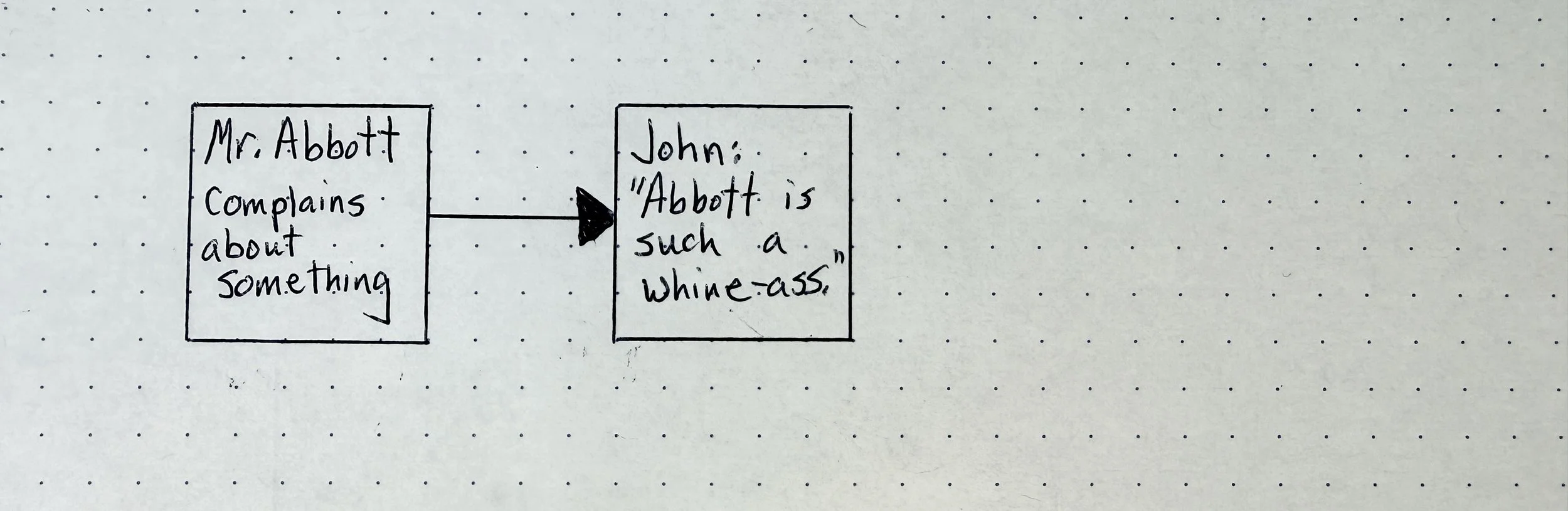
Map 2. My first mental model of John’s words, a simple action-reaction Relationship.
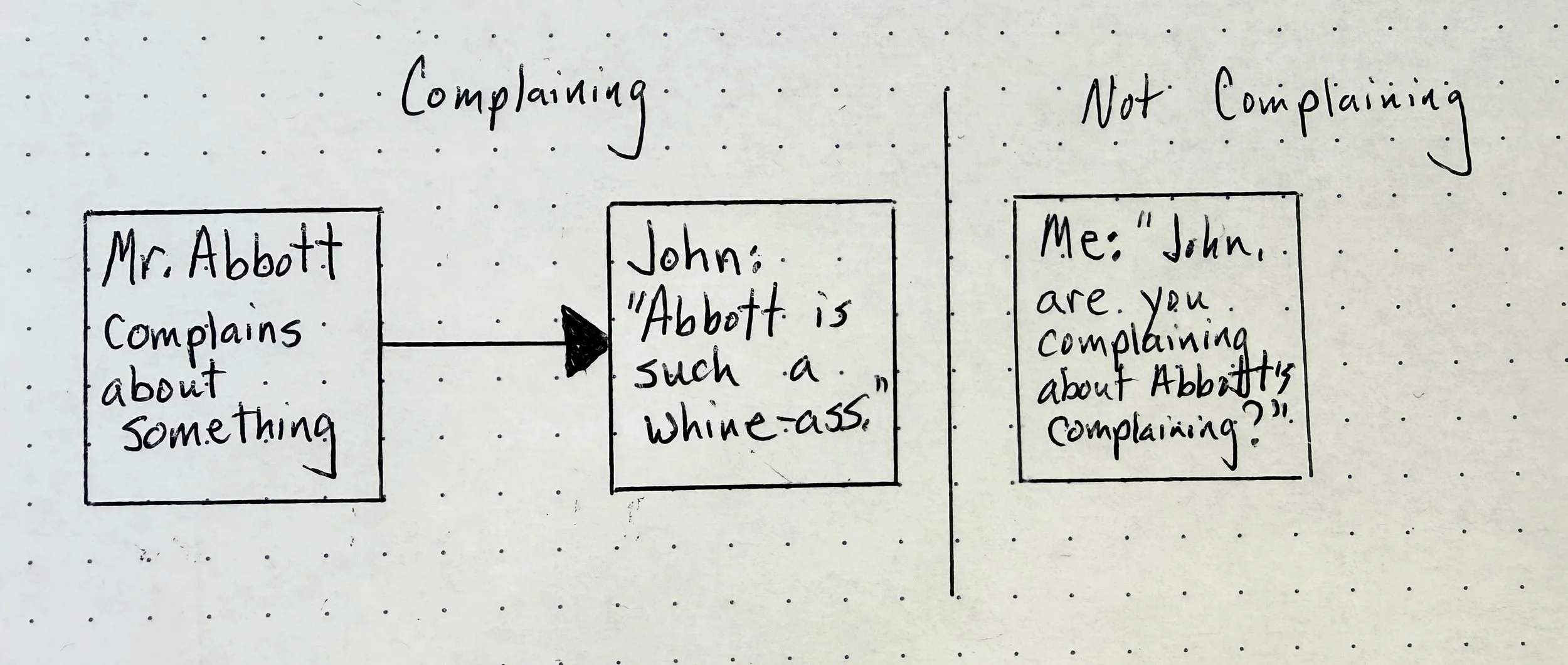
Map 3. We can map my interaction with John as a Distinction. If you look at Map 2 and then back at this map, making a Distinction shares Zoom out action.
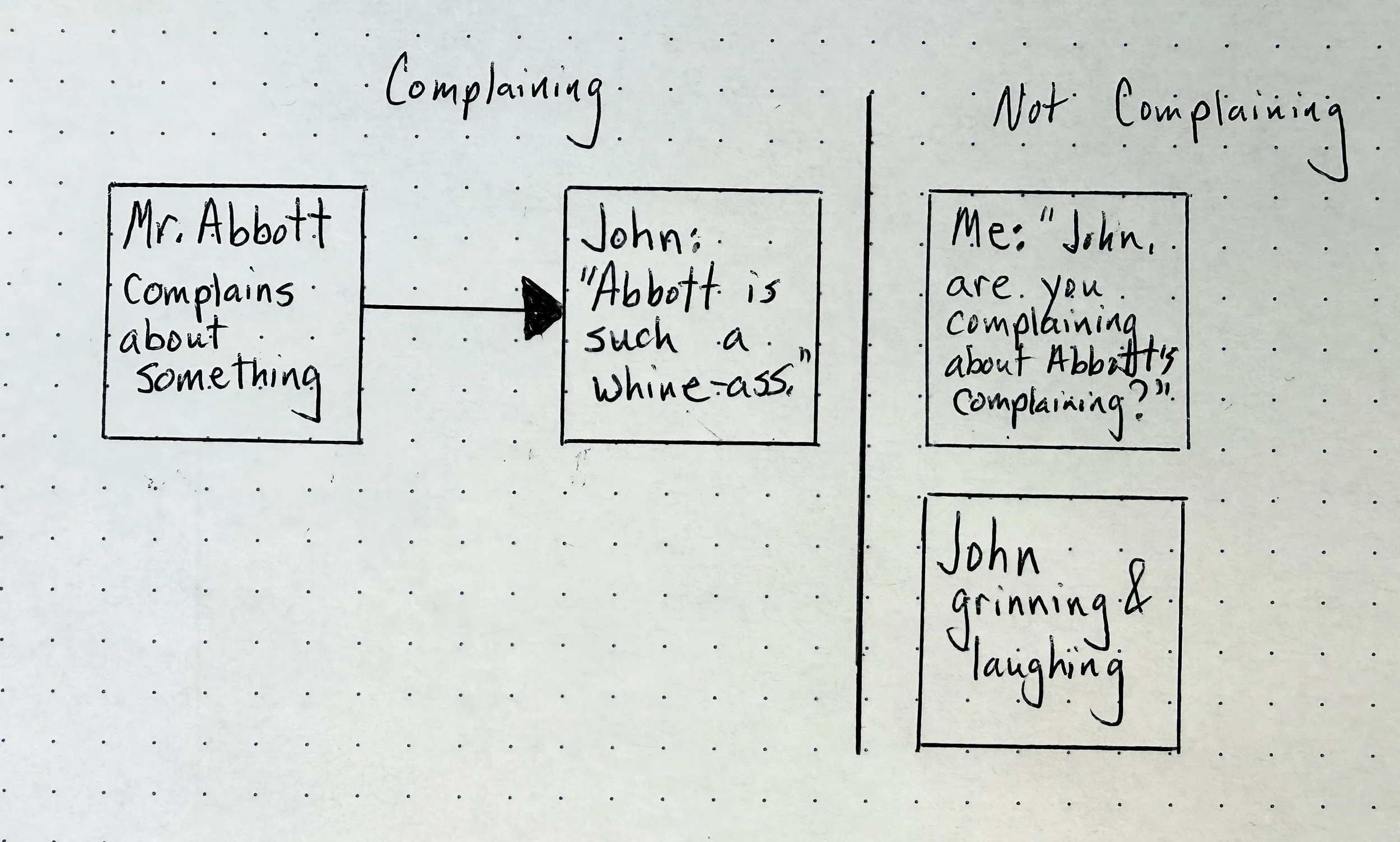
Map 4. Mapping the whole interaction as a Distinction. Because John and I had a good relationship and no one else was in the room, John was able to take my reply in a light and humorous way. He did’t see me as sarcastically complaining about his complaining about Abbott’s complaining. Had other students been in the room, I think it would’ve been harder for John to be as light. Since John noticed the humor and laughed, I’m confident he recognized the distinction I was making.
Note: I intentionally left out the relationship pattern on the other side of the distinction line to highlight the Distinction pattern. I could add Relationship lines and adjust the map so we could consider this event from another perspective where Relationships are highlighted.
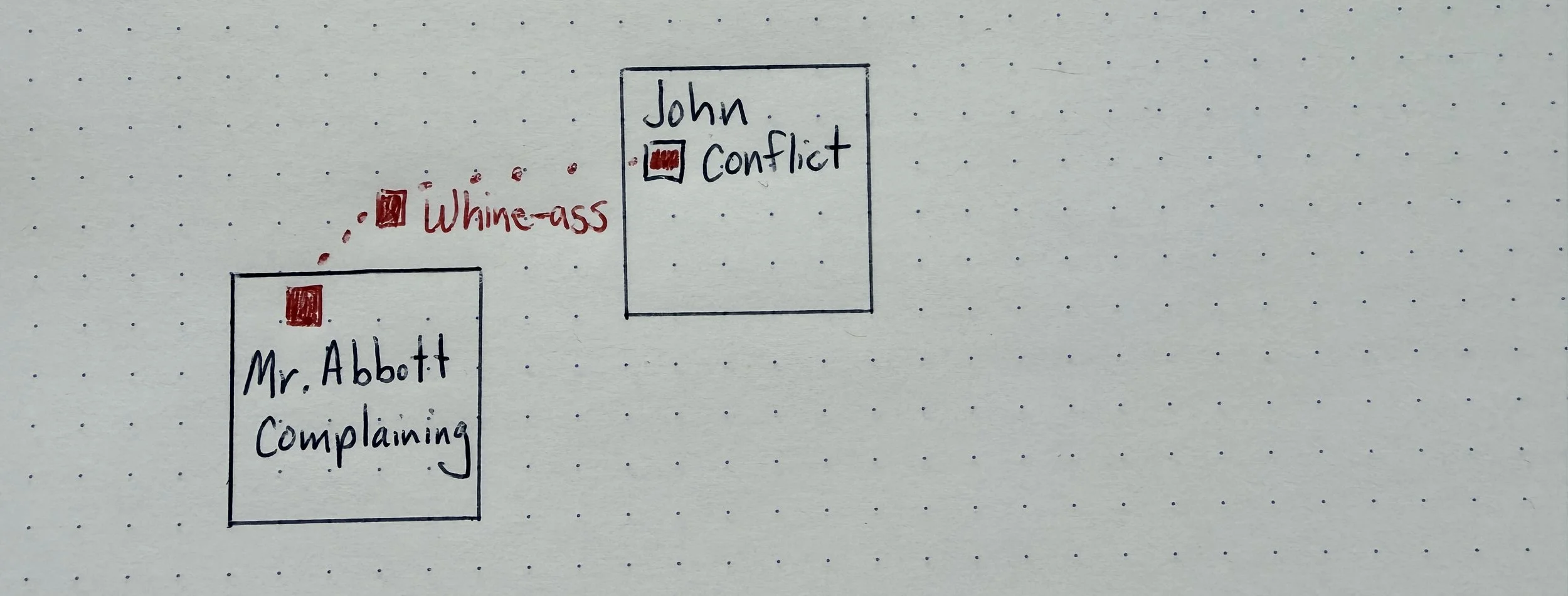
Map 5. Instead of the Distinction pattern, I could also model John’s remarks as a Perspective. The view is Mr. Abbott’s complaining, John’s point is conflict, and the Perspective is “whine-ass.” Since John as the point is vague in terms of understanding the situation, I’ve zoomed in +1 to conflict because it works as a conceptual point in this situation.
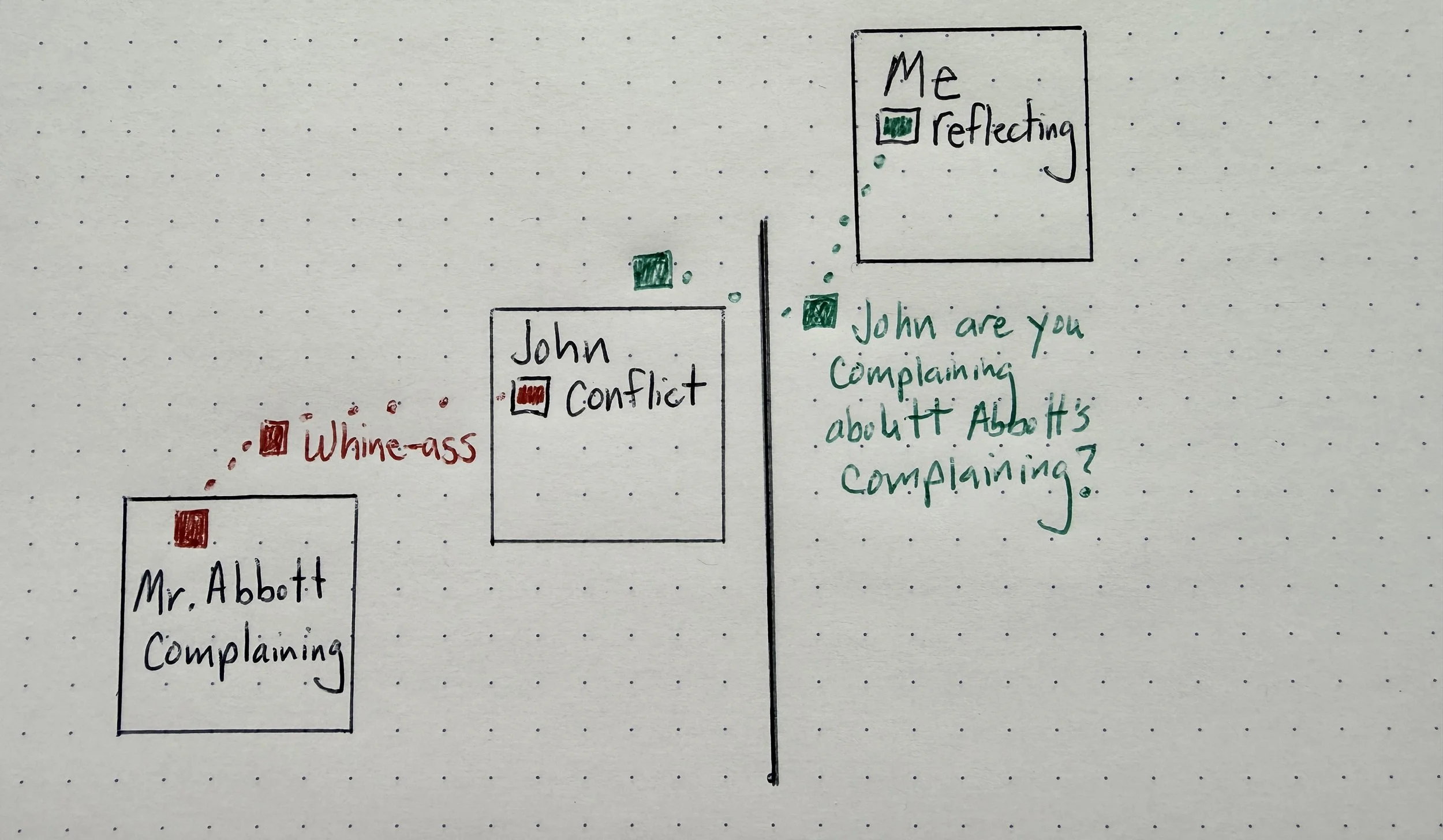
Map 6. After I’d spoken, the Perspective map looks like this. I’ve added a Perspective on a Perspective and a Distinction line as a boundary. My conceptual point is reflecting, because I was trying to mirror what I was seeing without using a conflict lens. Generally, effective mirroring requires having an established connection with the person. (Unless it is already embedded in cultural practices.)
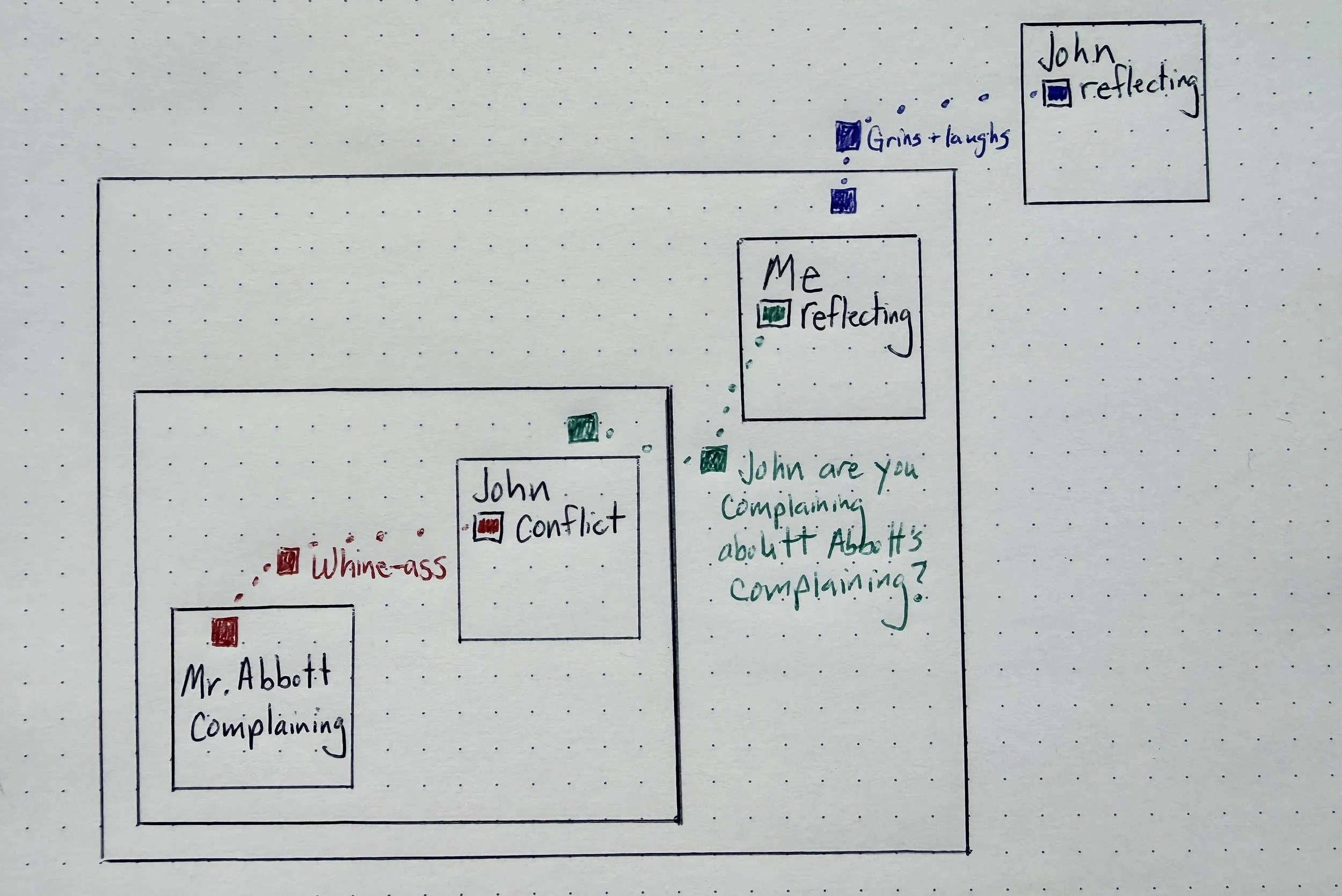
Map 7: If I update the map to add John’s aha as another perspective, it looks like this. If you’ve considered fractals before, you can begin to see a fractal emerging as Perspectives are added while zooming out.
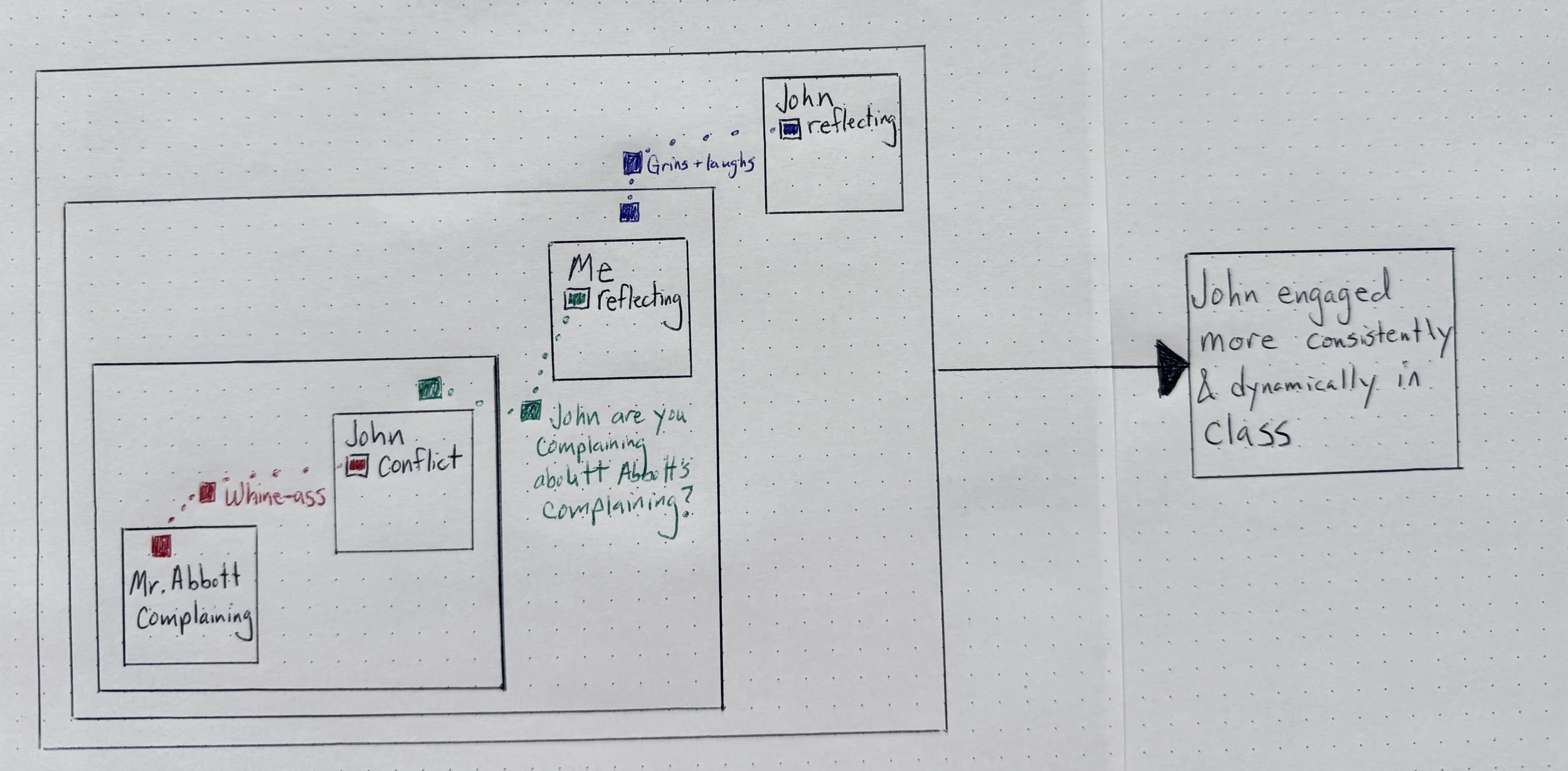
Map 8. Finishing up with this map, I’m representing the story as an action-reaction Relationship. The action is a system where the parts are structured as points, views & perspectives.
Continuing the Updates
Before I was introduced to DSRP, I didn’t really understand contradiction/confusion as a precise thinking problem in practical terms. I’m sure my use of the term hypocrite was determined more by whether someone was on my side or not, at least as much as by how often they actually contradicted themselves.
It’s been over 10 years since my interaction with John. I’ve thought a lot about how common it is for people to notice the contradictions in other people’s thinking, while remaining ignorant of both their own contradictions and the contradictions of those on their teams. It occurred to me early on in these reflections that given how common the problem is, it would be supreme foolishness for me to think that I am immune to the same reality distortions. During these reflections I also thought a lot about the causes leading to this problem and a practical anti-cause was hard to pin down.
This leads me to some of what excites me about DSRP 3.0. The research makes it clear that most people recognize identities quite readily, but fail to be clear about their distinction boundaries by explicitly fleshing out a list of other. This in part explains the contradiction problem and provides a specific intervention.
Additionally the research is clear on perspective taking as a skill. People are generally not that good at it. In my experiences, most students can take and change perspectives when they are not aware they are doing it. Additionally, plenty of dissonance and bias research suggests that people often change/ignore perspectives so that they can feel right. Confronting my own contradictions is challenging at first. After a little while though it becomes freeing.
Without DSRP’s P pattern and elements, making implicit perspectives explicit is tricky at best; communicating them accurately is even harder. However, if I am willing to practice
Being explicit that every perspective is a point on a view
That once view and perspective are identified I know their is a point, so I can take the steps to figure it out
Acknowledging across my experiences that when either point or view changes the perspective changes
Modeling that multiple perspectives does not mean their is no truth
It means often times truth can be complex and requires us to map our mental models to discover it. All mental models are not accurate representations of reality.
It also means that sometimes we can identify truth by organizing a map that helps us discover what a set of parts has in common. Ian did a version of this to arrive at his answer to my question about the Holocaust in my last post.
Finally, I think John’s reaction to recognizing his contradictory mental model is super instructive. When I can loosen my grip enough to have a laugh at myself and my mental models, I find it easier to let them go and organize some that better fit reality.
I’ll keep at these working memory work-outs… I’m rooting for ya!
Here’s a fun paper by the Cabreras. It helped clarify some questions related to the content in this post that I’d been tracking for a few years.